Categories
Math Education MathEd Tools

Maths iOS app: Wuzzit Trouble

wuzzit1NPR Math Guy Keith Devlin, from Stanford, recently followed up his promise from his 2011 book “Mathematics Education for a New Era”  and released a free maths game Wuzzit Trouble with his company Innertubegames. Of course, let me start by applauding the fact that someone follows up his theoretical ideas by practicing what he preaches, and releasing something as practical as a game. Naturally, I would have hoped it was released multi-platform, or even better, as a web application, but that could easily be construed as nitpicking. Apparently, there will be an Android version as well. I hope so, because I would be very weary promoting a game that only works on one brand.  After having read some positive reviews I gave the game a shot on the iPad3.
...consist of levels...
…consist of levels…

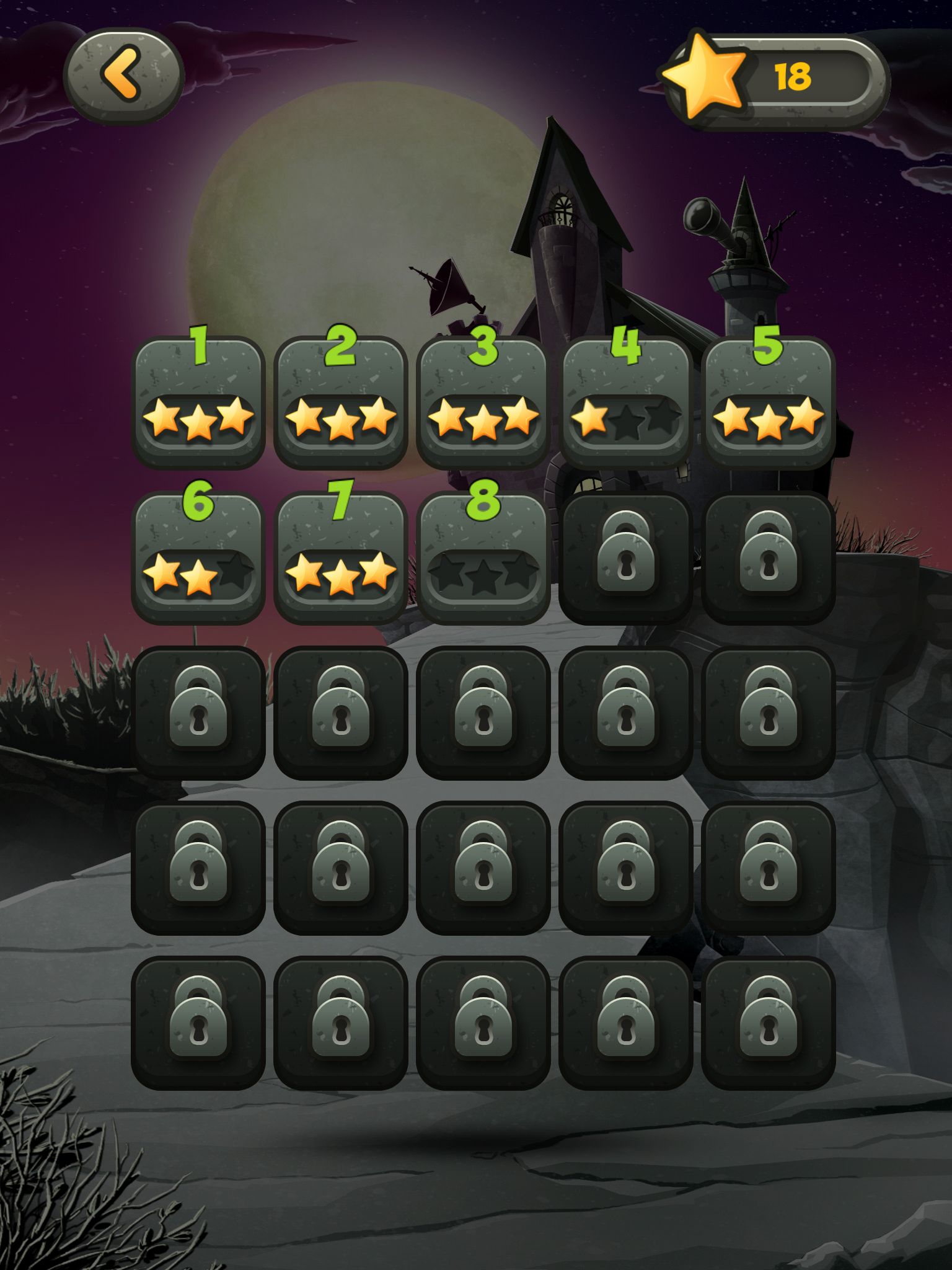
The game follows the structure we know from many apps, like Angry birds: you have levels (75 in total) that require you to solve a puzzle. The better you solve the puzzle, in this case the minimum number of moves, the more stars you earn. The story is about Wuzzits, cute characters that have to be saved. This ‘story’  is not really a story, of course, certainly not the immersive ones we know from blockbuster games like World of Warcraft or Bioshock Infinite. Maybe this isn’t really a fair comparison as these games are on a different level altogether, but that’s what you get as you mention World of Warcraft as a good practice (in the 2011 book).  In this respect I don’t think one of the statements from the 2011 book has been met: it shouldn’t really feel as if you’re doing maths. It is pretty clear that it’s about maths. No problem, I think, because maths and puzzles could be fun, anyway. The levels themselves consist of target numbers that need to be constructed by turning a cog, in the case below with 5. The cog can be turned to the left and to the right. The keys have to be collected by making the numbers by turning the cog. The stars are bonus numbers.

wuzzit9The interface is quite intuitive, and one really only needs a one page help page to get going. This is great, but also the case because the app has a limited scope: integer partitions, if there’s not a lot you can do then you don’t need a lot of instruction. In some cases the lack of maths notation has been applauded. I’m not sure about this; if players see this a maths game -and I think they will- why not introduce or use maths notation as well? I’m thinking of Dragonbox, which uses symbols but later connects them explicitly to maths syntax as well. Based on the number of moves someone needed to wuzzit5collect all the keys, the game awards you with keys, which means -in the narrative- you have rescued some Wuzzits. I didn’t really see how a lot of children would be motivated to find ‘the partition with least moves’  to win three stars. I think they’d just rather progress. I also wonder how this is different, or more interesting, than just timing exercises.

Frankly, after the positive reviews and an ambitious book, I had expected a bit more from the app; especially the scope could have been wider. At the NCETM conference I tried out Beluga learning (iOS only unfortunately) and found it much more enticing, and also Dragonbox (multiplatform, yay!).Sure, the rationale behind this game seems more grounded in a combination of procedural fluency and conceptual understanding, but at the moment just is too limited. I certainly wouldn’t yet say “Video Games Are The Perfect Way To Teach Math, Says Stanford Mathematician”. Innertubegames describes the game/app as a ‘framework’  that could easily consist of more activities, which will probably be called labs. This shows a lot of potential. I hope the makers can do their ambitions justice. Making good games is a time- and money-intensive exercise. You can have the framework but if there isn’t any money or you need a lot of time, then it would defeat the purpose of framework. As if you’ve made a search engine for five items. This will especially be a challenge if you want to put extra (mathematical) thought in the apps/games. I hope they will succeed in making some more and wish them good luck.
Categories
ICT Math Education MathEd Tools

Software for geometric proofs in secondary schools

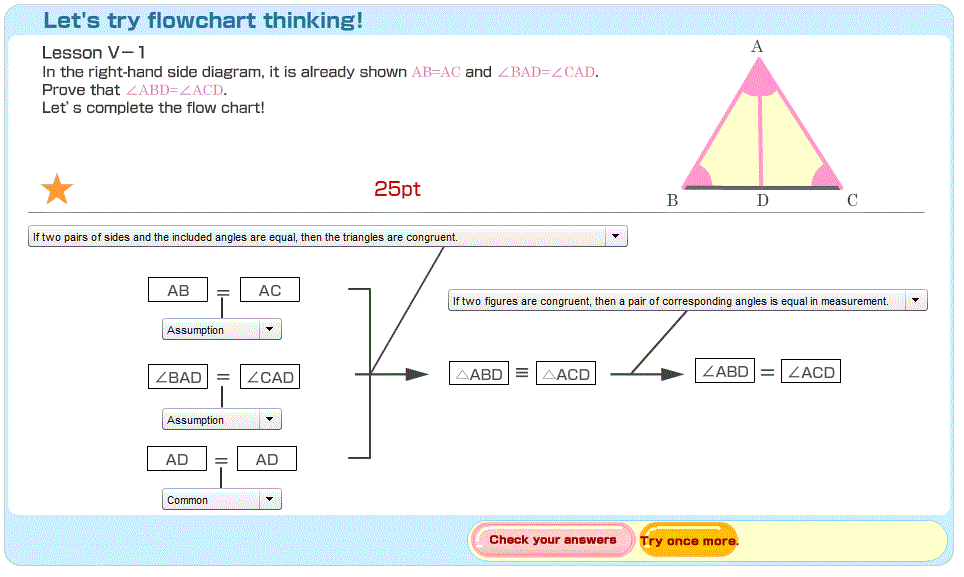
A week ago I attended a seminar at the School of Education with visitors from Japan. One of the visitors was Professor Mikio Miyazaki. He showcased some of his work on a flowchart tool for (geometric) proofs at Schoolmath. I loved it and would love to see this integrated as widgets in the Digital Mathematical Environment, for example. I will provide an overview in some screenshots.

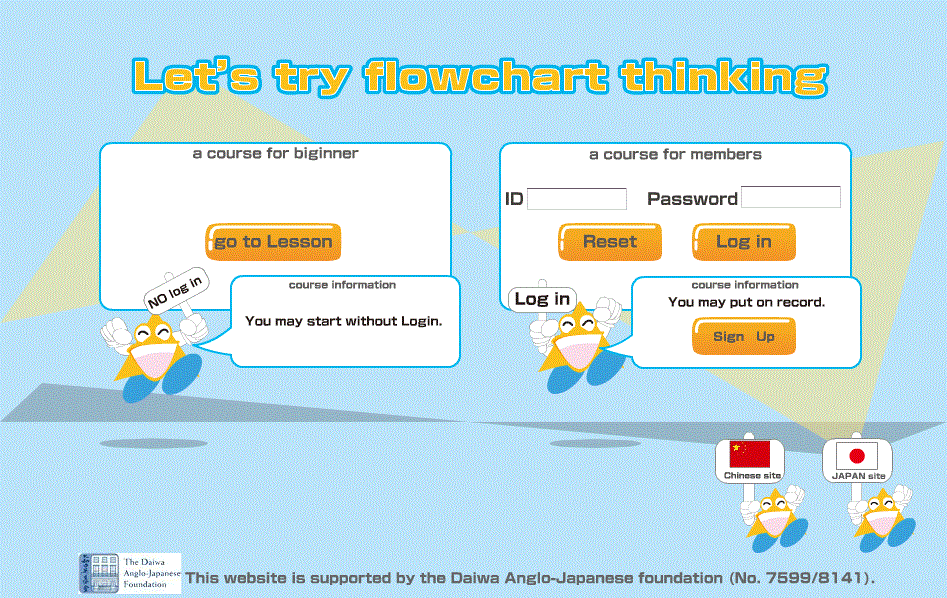
1. This is the entry screen. The flowchart tool is part of a larger environment that stores student information.

proof1

2. The materials are presented in a nice overview with levels. The stars do NOT denote difficulty but in how many ways you can actually proof the theorem that is presented.

proof2

3. I will choose the section on congruency. Students are presented with a geometry task and are asked to prove the theorem presented (I did not yet manage to find out what the difference between elementary mode and advanced mode is). In this particular example there are four stars, so four possible ways to prove it with the help of congruency. Students have to fill in the flowchart by choosing a strategy/action and providing angles and sides. I love the fact that I can just drag and drop angles and sides to the answer boxes and they will appear there.

proof3

proof4

4. Having filled in the flowchart the answer can be checked. One of the four stars is coloured yellow.

proof5

5. Wrong answers are provided with feedback and an indication where the mistake is:

proof6

6. Another final example:

proof7

It was interesting to hear that this project faces a challenge that many educational tools face: converting flash and java tools to HTML5 format. I’m still quite disappointed that the Apples, Adobes, Googles and Oracles of the world did not manage to provide a transition period.

Categories
ICT Tools

More on Openbadges

I seem to get involved into many #openbadges discussions on Twitter lately. A while back I wrote on my blog about this topic. I think it was quite well-balanced, acknowledging the positive points but also having soOpen badges website

Open badges website

me questions. I sent the mail to one of the leads in openbadges as well and got a useful reply, albeit referring to reactions to earlier critical posts here and here. Both sources raise similar points, which is comforting but doesn’t get me closer to a possible answer. The rest could have been for the Google Group. Well, I didn’t go there, as I had just written an extensive post. The final line in the reply (see below the first post) was : “intrinsic/extrinsic is *itself* merely a construct, and the recognition of which badges are valuable is an emergent property of the ecosystem.” Later on I had to mail. Well, I did that, so I think that ended with ‘We agree to disagree’ (well, I agreed ;-)).

The discussion came to the front again when I was included in this tweet:

This point was one of the points raised on Twitter and also in the aforementioned blogpost. I never really got an answer. Retracing the discussion on twitter it seemed to have started with a a link to a post called “Let’s ban the sticker, stamp and star” and then a comment that OpenBadges were much different because they were ‘intrinsic’ and stickers ‘extrinsic’. I don’t agree, both have both sides, if we can even see it that black and white. Badges are issued (http://openbadges.org/issue/). Stickers are issued. Badges are earned, stickers are earned.  My point is that I don’t agree with the fact they are presented as a lot different. Of course the scale differs. And it’s online in the cloud, so those are all positive points. But different with regard to motivation, I don’t think so.Badges can be another tool in the vocabulary of teachers and students, but like any tool they can be used in good and bad ways. Potential? Sure. But stickers had potential too! 😉ob

The point on having 1000s of them and ‘control’ over them came up as well; it actually was the topic of the tweet ‘that started it all’. The answer would be ‘metadata’. Well, I wasn’t talking about how you are going to find the badge(s) you want, I was talking about the way the value of badges is determined.

(Note: it was pointed out that metadata is more than just information on location, but also a pointer to criteria and evidence:

Fair enough. But that wasn’t the point, the point was that metadata -in my opinion- will not ‘solve’ the institutional issue. How can we evaluate these criteria and evidence between badges? What if there are 1001 Algebra 101 badges from different institutions? Or someone makes his/her own badge? It’s nice that an individual has an overview of his/her badges, but how can this be useful in the workplace? I worry that it will be just as hard and difficult as before with CV’s, but looking slightly different. Suggesting that OpenBadges will change this is wishful thinking.)

It also has been suggested that that too is  “the recognition of which badges are valuable is an emergent property of the ecosystem.”. To me, that sounds like market thinking, but worded differently. Just like ‘the market’ it will depend on the user how much he/she values the badge. Just like the fact that this is pretty hard to do when it comes to cars, houses or insurances, this -in my opinion- will be even harder for educational goals. Does this mean I won’t have anything to do with them? No. I’ve added a Justin Bieber badge to my developer Blog, worked in Moodle with them (in combination with SCORM) and even added them as an experiment to a forthcoming European project (that I will hopefully get, not sure yet). I will keep on thinking about this, hopefully encountering more valid viewpoints than “do your homework” and “shakes head”.

Categories
Math Education Research

Longer schooldays

A recent assertion in the media (and of Gove) is that longer schooldays would lead to better performance and make life easier for working parents (see here, you can even give your opinion here). The latter is probably true but of course, in my opinion, the task for education is not to babysit children. In line with the request for evidence-based research I will present some facts and graphs. As Gove specifically refers to Asian countries I think it is relevant to use international indicators to study the hypothesis that ‘more hours lead to better performance’. Of course, it’s possible to criticize some of these indicators, but it is based on these indicators that international comparisons are made. I made use of:

– Year 8 TIMSS 2011 results for mathematics (source)
– PISA 2009 results (source)
– OECD Education at a glance data from 2012 (source)

I focused on lower secondary education as this seems best aligned with Year 8 TIMSS results.

The first scatterplots I made plotted the average number of hours per year of compulsory instruction time in the curriculum for 12-14 year olds, against the TIMSS 2011 maths result. Later, I also did this against PISA 2009.

oecdhourspisahoursinstruction

There is a very small (not significant) correlation between these variables. We can’t conclude that a larger number of hours is correlated with TIMSS and PISA performance. I then looked at teaching time:

oecdhoursteachoecdhoursteachPISA

After having seen this blogpost, confirming this, I also looked at teaching days, as a comment on the blogpost seems to suggest that there is a small positive correlation between teaching days per year and performance (note I consistently say ‘correlation’ as causal effects are very difficult to prove).

pisadaysinstructionoecddaysinstruction

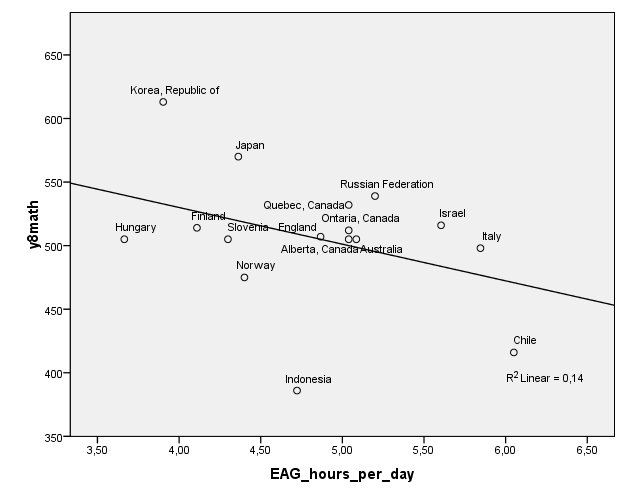
Indeed, there is a small positive correlation. This, however, can be explained by hypothesizing that some countries have short days and others have long days. To explore this hypothesis I subsequently computed the ratio of the average number of hours per year of compulsory instruction time in the curriculum for 12-14 year olds, and days of instruction for lower secondary education. Plotting these:

pisa_hours_per_daytimss_hours_per_day

This suggests there is small negative correlation between the average number of hours per day against PISA and TIMSS performance. I conclude that there is no basis for the conclusion that more school time increases performance. Actually when looking at a number of OECD indicators (and also including indicators for press freedom, the GINI index for inequality, and the Human Development Index) there only seems to be one very strong correlation for both PISA snd TIMSS (which makes sense as both are strongly correlated): a higher salary per hour of net contact (teaching) time after 15 years of experience. There is a significant positive correlation between these variables.

oecdsalaryoecdsalaryPISA

Categories
Math Education MathEd Research

BSRML conference – report

I have written three posts on the BSRLM day conference on November 17th, 2012.

The three posts are:

BSRLM conference part 1
BSRLM conference part 2 Alnuset
BSRLM conference part 3

Categories
Math Education MathEd Research

BSRLM conference part 3

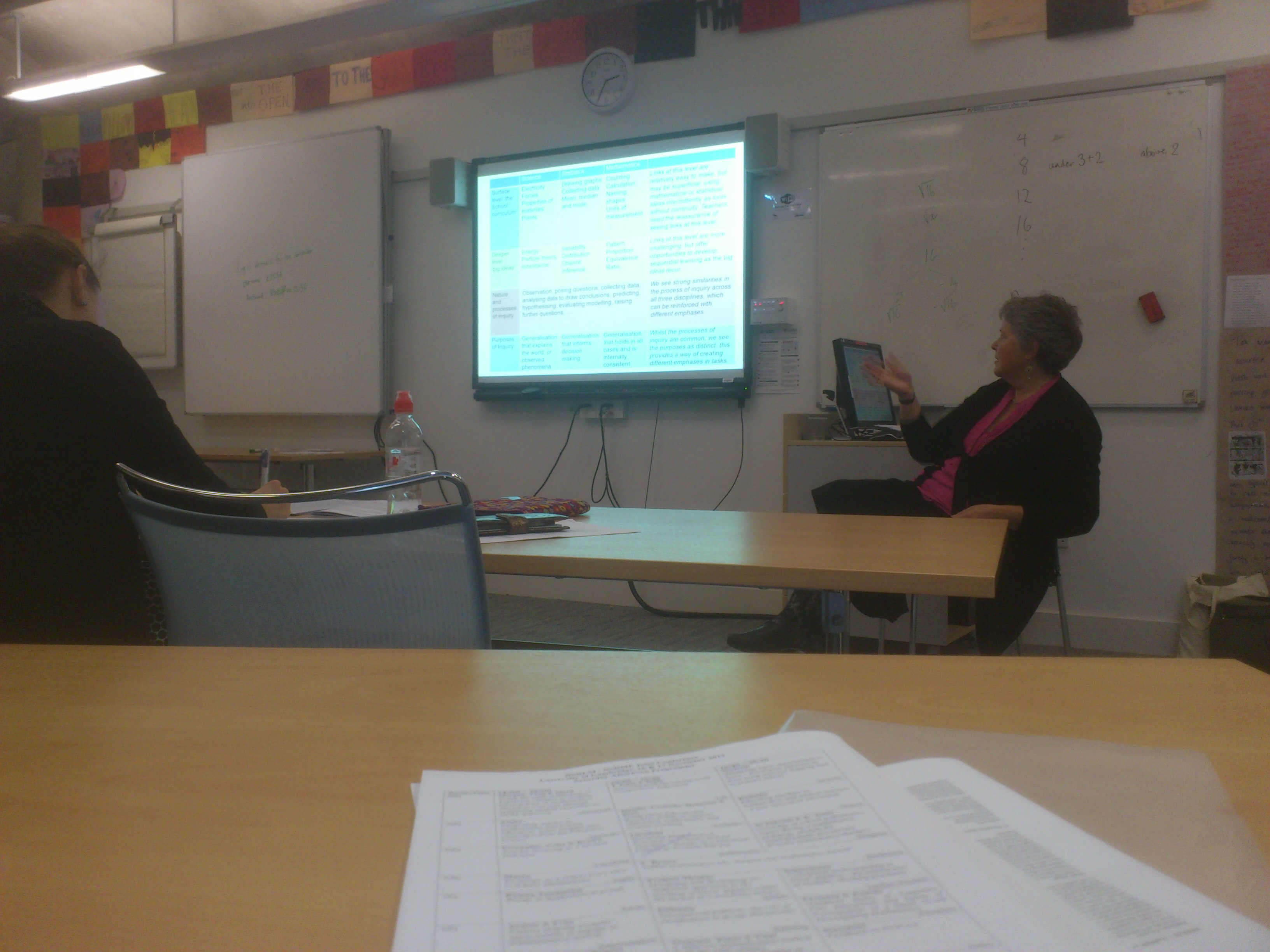
The fourth session by Ainley reported on the Fibonacci project, integrating inquiry in mathematics and science education. It was good to hear that the word ‘utility’ that was used, did not refer to a utilitarian view of maths, i.c. that everything should have a clear purpose. I mention this as discussions about utility often tend to end in comments like ‘what’s the point of doing algebra’? Actually, I think that does have a purpose, amongst others ‘analytical thinking’ but I prefer steering clear from these types of pointless discussions. The best slide, I though, was a slide with science, statistics and mathematics in the columns and rows with a distinction in, for example, their purpose.

It formed a coherent picture of STEM. The two examples for integrative projects were ‘building a zoo’ which I didn’t like when it concerned the context of fences that had to be built. It’s the lack of creativity that often is in textbooks as well. the second project, on gliders, was more interesting but the mathematical component seemed to belong more in statistics used. I would loved to have seen a good mathematical example.

The fifth session by Hassler and Blair was about Open Educational Resources. The project, funded by JISC, acknowledged three freedoms: legal, technical and educational. It is a project that boasted a website with educational resources, free to use, keywords and with pdf creator. Although nicely implemented, to me, it seemed to be a bit ‘yet another portal’. The individual elements weren’t that novel either, with for example a book creator also in the Activemath project. The most interesting thing was the fact that the materials were aimed at ‘interactive teaching’.

The sixth and last session was a presentation by Kislenko from Estiona. She described how in Estonia a new curriculum was implemented for educating teachers in mathematics and natural sciences. It was an interesting story, although I was wondering how ‘new’ it was, as the title had the term ‘innovative’ in it.

Together with some networking these sessions made up an interesting and useful day in Cambridge.

Categories
ICT Math Education MathEd Research Tools

BSRLM conference part 2 Alnuset

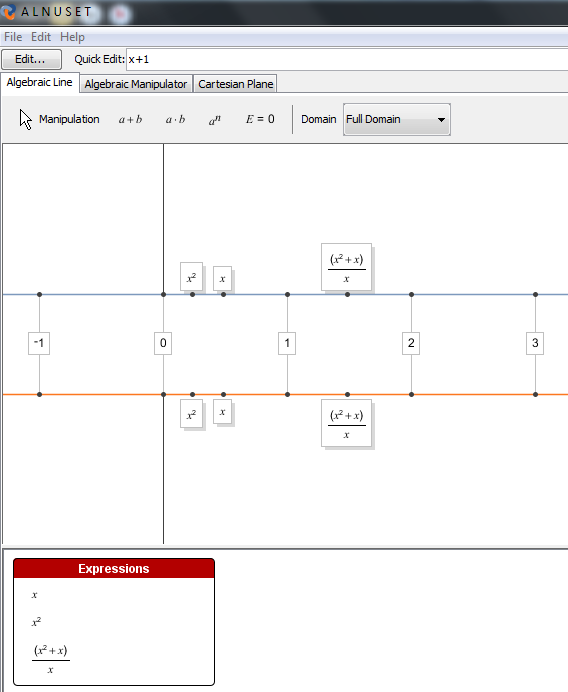
The third session I attended was more a discussion and critique session, led by Monaghan and Mason, on the topic of ‘cultural affordances’. The basis was the work of Chiappini, who -in the ReMath project- used the software program Alnuset (see here to download it) to look at (its) affordances. Monaghan described the work (a paper on the topic, there will be a publication in 2013, was available) and then asked some questions. Chiappini distinguishes three layers of affordances: perceived, ergonomic and cultural. Engestroms cycle of expansive learning is used, as I understood it, to use activities as drivers for transformation of ergonomic affordances into cultural affordances. Monaghan then asked some critical questions, under which whether the theory of Engestrom really was necessary, wouldn’t for example Radfords work on gestures be more appropriate? Another comment pondered whether the steps for expansive learning were prescriptive or descriptive. I think the former: as the author has made the software with certain design elements in mind it is pretty obvious that they have a preconceived notion of how student learning should take place.  It was pretty hard to discuss these more philosophical issues in detail. I’m not really sure if I even understand the work. Although this could be solely because I haven’t read enough about it, I also feel a bit as if ‘difficult words’ are used to state the obvious. I could only describe what I was thinking off. The article that I took home afterwards gave some more pointers. To get a grasp of this I downloaded the software, that reminded me a bit of the Freudenthal Institute’s ‘Geometrische algebra’ applets, and tried out the software. I liked the idea behind the software. In this example I’ve made three expressions, and I can manipulate x. The other two expressions change with x. Some comments:

  1. I like the way expressions are made and the look and feel, as well as the way dragging changes the expression. Also ‘dividing by zero’ causes expressions to disappear. However, why does x=0 disappear as well when I drag x to 0? (see figure)
  2. I don’t see how the drawback of every tool that allows ‘dragging’, namely just pointless dragging, in this case just to line up the different expressions, is solved. Maybe this isn’t the main goal of the software.
  3. I think that the number line should be used in conjunction with tables and graphs, thus forming a triad expression-table-graphs. The addition of things like an algebraic manipulator and a Cartesian plane seems to indicate that the authors also like more than one representation.
  4. It has far too limited scope for algebra. The 30 day trial is handy here, as in my opinion the software doesn’t do enough to warrant the price.
Categories
Math Education MathEd Research

BSRLM conference part 1

On Saturday November 17th I visited the second day of the BSRLM conference (British Society for Research into Learning Mathematics). I’ve become a member as it’s ‘the place to be’ for maths education research. This time the conference was in Cambridge, and apparently I was the only one tweeting #bsrlm.

The first session I attended was by Anne Berit Fuglestadt from the university of Agder (soon, homebase of a Dutch researcher I know). She reported about teachers discussing inquiry-based teaching with digital tools.

The second half of the session consisted of discussions on instrumental and documentational genesis (The French School, Trouche is an important name). This was fitting, as one PhD student I (co-)supervise is studying instrumentation as underpinning framework for her study.

The second session was an interesting take on use of the Livescribe pen. At first it seemed as if the study, done by Hickman and Monaghan, seemed a bit of a waste of the livescribe pen. Emphasis was put on the audio recording facilities.

Luckily, as I could have expected, they did more with the pen. The pens were used to record student work while ‘thinking aloud’ and these materials (a sort of screencasts of what was written) were used for a combination of stimulated recall and task-based interviews (e.g. Goldin, 1997). Hickman showed some discourse by primary students that was recorded with the pen. It was nice to see student work being ‘constructed’ instead of just having static scans of their work. It also was nice that we could try out the pen ourselves. I did think more can be done with even the older generation of pens. For example, Dragon Naturally Speaking does doe a decent job of transcribing voice, just as long as it is trained to recognize it. It will certainly cut the amount of time you need for transcribing an hours worth of audio.

Another application to use would be Myscript, from the same company that brings a great online equation recognizer. The latest version of the pen also boasts Wifi and Evernote integration, so it looks interesting. It will certainly be worthwhile to check out this for our SKE+ group. A follow-up discussion could be whether these devices will eventually become obsolete if tablet technology with styli, like the Galaxy Note, takes off.

Categories
ICT Math Education MathEd Tools

Geogebra on the Web

Of course, most of us will already know Geogebra. The latest incarnation, called GeogebraWeb, is made in HTML5 and is a great next step towards an application -as Geogebra initially is java software- towards software for various platforms, including tablets. In a kickstarter project Geogebra is now asking funds for making an iPad app. I’m wondering why. Sure, I can think of some reasons, including the great demand for it and maybe even some native features can be used more efficiently than in HTML5. But it isn’t open. Also the fact that other tablet users will just have to wait, even though it is jokingly stated that it will eventually become multi-platdorm for other tablets too, seems strange if the philosophy behind geogebra is open-ness. Then why not stick with HTML5!!!??? Or just make sure that both android and ipad apps are released on the same day!!!!???

And there are more questions. One of the novel HTML5 features is a Google Drive connection (screenshots above and below).

This is the file it created

The advantage of providing open tools is that this perhaps could be other online drives as well. How can we be sure that different platforms will communicate with different cloud functions, knowing that, for example, Apple and Google do not always see eye to eye. And that would be a shame. Inter-operability should work for all environments.


NOTE: In an earlier post I already mentioned that storing student tasks online would be beneficial, describing the DME (DWO in Dutch).

Categories
ICT Math Education MathEd Tools

Dabbling in Sketchometry

Sketchometry

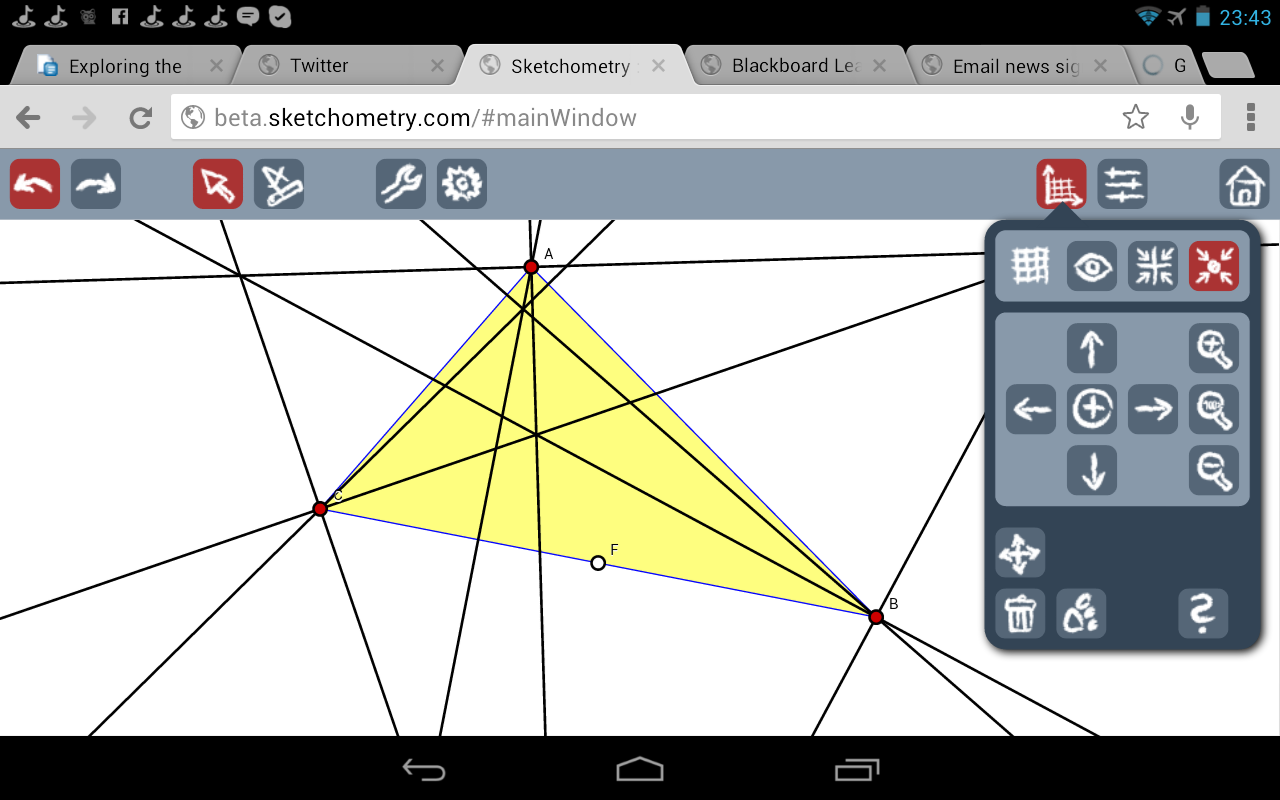
After being alerted by a colleague, today I dabbled a bit in Sketchometry. I like it. It can recognize finger gestures, especially useful on tablets, for geometric constructions. There is a calculus function but frankly, this adds nothing to the program. Its strength lies in geometry, and the fact that it works on almost everything, as it is web-based. Furthermore it connects to Dropbox and other cloud-systems. It took a while to get used to the cluttered user interface. Reading this file with available gestures really helped a lot (although there is a mistake, where naturally making a circle should give a circle not a straight line). The number of options and features is not very large.

Midpoint gesture

The quintessential construction is the Euler line. I tried to make this on a Nexus. The screen isn’t big enough, really, for the best experience. Also, the use of my (fat) fingers did not work all that well. Certain gestures were hard to carry out, especially if they involved selecting certain points, like drawing perpendiculars or designating intersections. But even if this was the case, it was great to be able to use gestures, anyway. After around 200 gestures (I had to undo many of them because it recognized the wrong ones) I had something that resembled Euler’s line. I loved the gestures for bisectors and midpoints, with the latter being a one from point to point and a loop in the middle. With quite a few objects the application did seem to slow down considerably, and some icons seemed to disappear.

This could be the case because it could be considered a beta version. What bodes less well for the future is the fact that the most recent post is from Jun 23rd (2012). I hope this does not mean it is the end-product of ‘yet another project’, and now that the project is finished no more updates are given. One of the strengths of for example Geogebra is that it managed to create a large userbase and community working on the software, but also creating content.

Of course, the application would have been even better if it would provide character and formula recognition like in windows 7, Snote by samsung, Inftyreader or visionobjects….. 🙂 But overall it is a great concept!

Dabbling in Sketchometry